How to Market Your First Book Without a Huge Budget
29 October 2026
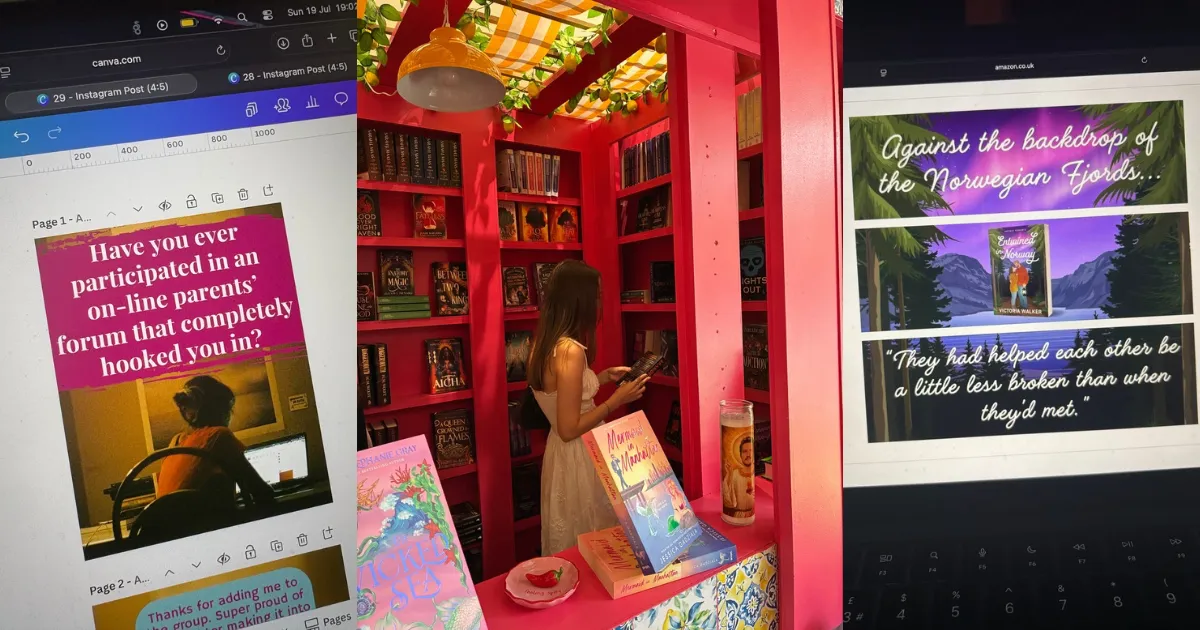
Whether you’re a first-time author, a multi-book author, indie or traditionally published, marketing your book matters more than ever. Publishing has changed with the digital landscape, and it’s now essential to market your book on social media (and other platforms). The good news is that you don’t need a big budget to do it well.
Here’s why you should be doing it yourself:
- It gives you more power and control over who sees your book.
- AI is on a massive rise, so it’s important to show the authentic you rather than hide behind a book.
- It teaches you a lot. I know plenty of authors who enjoy promoting their books, and being an active part of the process shows you what to improve on your next one.
So those are my top three reasons to market your book yourself. Now for how to actually market your book on a budget.
Step 1: Choose Your Marketing Channels
I’m going to (virtually) hold your hand when I type this. You need multiple author platforms to market your book. Here are my key points about choosing your marketing channels including what to do about socials (including bookstagram and booktok), your author website and an author newsletter.* *
Social Media
Social media is the obvious channel for authors. It’s quick and easy to post, which makes promoting less tricky than on other platforms. My top tip is to stick to 1-3 platforms. Here are my recommendations:
Instagram (and home of bookstagram) is the goddess of all social media platforms, and it’s relatively easy to use. It’s visual-first and supports lots of formats, including videos, posts and carousels. It’s also one of the most popular platforms, which means more of your potential audience and more eyes on your book.
Facebook is great for book promotion, especially if your readers are a slightly older demographic. One of my clients gets her highest engagement there. It suits longer-form content like book extracts or longer musings. As I write this, Facebook doesn’t do carousels (crying face), which is a shame because carousels are some of the best-performing content. But it works beautifully alongside Instagram: connect the two and you can schedule posts for both on Meta Business Suite. Massive pro.
TikTok seems to be a scary thought for prospective authors. I’m asked about it far more than any other platform. It’s definitely my favourite, thanks to its carefree vibe compared to the more polished platforms, and it’s a great place to experiment. That said, TikTok is for video, and video only. It lets you post other formats, but in my experience they never perform as well. Although, booktok is a great place to be on socials as an author and probably the biggest online book community.
Other platforms include Threads, LinkedIn, Pinterest, X (Twitter) and Bluesky. I’d only suggest these if you know your readers are there. Think about who uses each platform and whether they’re the people you’re aiming your book at. If yes, go for it. If no, don’t bother. You don’t have to be everywhere all at once.
If you want to check who’s on which platform, this article on social media platform demographics is a useful starting point.
Email Marketing
Email marketing is probably my favourite form of marketing because it gives you the most back. Most authors use newsletters to update readers about their books and their life. You can set one up for free with providers like MailerLite and Mailchimp. Best of all, you don’t have to worry about an ever-changing algorithm, which is a constant headache on social media.
Start building your mailing list by promoting your newsletter to your social media followers, and pop the sign-up link in your bios and on your website. Make sure people actively opt in, as that’s a legal must under GDPR.
Website
An author website is your central hub, where any reader can find your book and information about you. Keep it simple: a home page, a page for your book(s), an about page and a newsletter sign-up form. To help more people find it, write blog posts on topics from your book. This is called Search Engine Optimisation (SEO), and it helps your book turn up in online searches.
Step 2: Know Your Reader
The most important thing is to know your reader before you post anything. Where do they spend their time? On Instagram, or in their email inbox?
You can find your audience by looking at authors who write similar books to you. Write down three to five of them and see where they’re active, what their posts look like and what their readers comment on. An easy tactic is to follow those authors and their readers to create some initial engagement on social media.
Step 3: Make Your Book Easy to Find
No one wants to search high and low for your book, so make it as easy as possible. Your website should show your book cover, the blurb and buy links. The buy links are super important, whether they go to Amazon or a bookshop. Local bookshops are always a win for readers who want to support indie shops.
A link-in-bio tool like Linktree helps too. Annoyingly, links in captions aren’t clickable on most social media platforms, so a link in your bio is really useful. Linktree keeps everything organised with multiple links in one place. Check out mine here as an example.
Step 4: Build Your Email List from Day One
Use free incentives to grow your list, like a sample chapter, a bonus scene or even a free book. I’ve subscribed to authors’ newsletters for a free book myself.
Pick your email service provider and create a template to use for every email, so people know what to expect when they open your newsletter. Choosing your frequency matters too. I’d recommend every two weeks or monthly, but it’s really up to you.
Step 5: Avoid Heavy Promotion
Surely marketing means promoting all the time? No. This is a common mistake authors make. If one of your favourite brands constantly posted about its products, would you find that engaging? Unless it’s M&S, probably not.
The best way to market your book is through subtle promotion. One of my clients, Victoria Walker, has written a series of books set in Iceland. When she asked me to market the series through winter, I wanted to avoid constant book promotion. So I created posts about Iceland (the setting of her books) and some top places to visit, plus posts about her characters’ hobbies. I also had her create content about being an indie author, which attracted lots of indie authors to her page. She definitely has more eyes on her book now.
Not everything needs to be a hard sell. Content about your books, your writing process and even your day-to-day life is something readers will eat up, trust me.
Here are 5 post ideas you could use to avoid heavy promotion:
-
Setting
Share content about the setting in your book, whether that’s cosy Iceland or sunny Greece. You could pick out your favourite spots of the location, if you have visited before.
-
Character hobbies
Do your characters have interesting hobbies? If so, make content about them!
-
Writing process
-
What is your writing process? Are you a planner or do you write in chaos? What bit of the book are you currently writing? Posting content about your writing process is authentic and keeps the reader excited about any upcoming releases.
-
Book playlists
This one is for the romance authors out there. Book playlists are a great way to subtly promote your book and giving readers some solid music recs.
-
Reader Q&As
-
Want to boost your engagement? Getting followers to ask you questions about ANYTHING is the best way to make content that they are interested in and will engage with.
Check out my socials for monthly author prompts that can help you stay on top of your content.
Step 6: Keep It Going
Even after your book is released, keep marketing. Lots of authors make the mistake of focusing only on the launch. Be consistent. It’s the best way to stick in a reader’s head and keep their attention.
The best way to create engaging content is to experiment with lots of different formats and see what works. Once you know (look for high views, comments, reposts and shares), you can rejig the format, for example turning a post into a video. You can also do spin-offs. If a book inspiration post does well, repeat it for your other books.
Step 7: Connect With Other Authors
Connecting with other authors is so important in this industry. You get support and reassurance with all things writing, and it can lead to some fab opportunities like newsletter swaps and cross-promotion. These can boost your engagement and even put a few book sales in your pocket.
Author communities aren’t as scary as they sound. Genre-specific Facebook groups, Instagram author communities and local writing groups are all good places to start. Be a genuine part of the conversation first by commenting, sharing and cheering others on, then suggest a collaboration. Just make sure the author writes the same or a similar genre as you, because their community will already know and love your genre and be more likely to be interested in your book. So why not?
Step 8: Make Your Launch as Smooth as Possible
Launching a book, especially your first, can be daunting, but having a book launch timeline prepared a few months in advance is a lifesaver. If you’re traditionally published, chat to your publisher’s marketing team first so you know what they’re already doing and can fill the gaps.
A bit of self-promo here: if you’d like help with launch strategy, you can look at my author marketing services and get in touch. I offer budget-friendly options that work around your timeline, budget and book.
But as you’ve got this far, here’s a little treat: the launch timeline I use with lots of my clients, covering what to post and when (most of it is promo).
3 months before launch
Get your book on pre-order so you can direct followers to your Amazon (or other) book page, and make sure your cover and graphics are ready to go.
-
Pre-order now available (the sooner this is out, the better)
-
Cover reveal (give your cover the moment it deserves)
-
What is your book about? A mini blurb reveal (not a trope reveal yet)
1 month before launch
-
Trope reveal [template here]
-
Character reveal [template here]
-
Teaser quotes
-
Pre-order reminder (don’t be afraid to remind people)
Launch Week
-
“Now available” post, specifying where readers can buy the book [template here]
-
Quotes that give away a little more to get readers hyped up
-
Memes
Post launch
-
Book reviews. Don’t be afraid to share them, as people are more likely to read your book after seeing positive reviews.
-
Inspiration for your book video
-
Maybe a hint at the next book
Bonus tip: build an ARC team
Yes, you read that right. An ARC (advance reader copy) team is a group of readers who get your book before launch, in exchange for sharing their honest thoughts. And it doesn’t have to cost you a penny.
There are two easy ways to find your readers:
-
Ask your followers. Post on your socials or send a newsletter asking who would like an early copy. To keep costs down, send them a digital version, such as a Kindle copy or a PDF.
-
Reach out to Bookstagrammers. Find creators who post about your genre and offer them a free copy. Always check that they’re open to review requests first, and keep your message friendly and personal.
Why is it worth the effort? An ARC team builds buzz ahead of launch day, and when people start talking about your book (posting, tagging, reviewing), the algorithm is more likely to push your content out to more people. You also get early reviews to share on launch week.
Step 9: Track What’s Working
Now you have an amazing bank of content across your social media accounts (and maybe your email and website analytics too). Look at what’s working and what’s not. Instagram and Facebook Insights, your newsletter’s open and click rates and your website analytics are all free. Maybe the quote posts aren’t landing, but videos of you talking to the camera are. Look for posts that perform well and recreate them (as I mentioned earlier, this is the best way to keep your readers interested and ready for your next book).
Keep the momentum going and don’t stop posting just because your book is out. But if you want to slow down, that’s fine!
That’s a Wrap
Thank you for sticking around and reading my blog post. I hope it’s helped you start thinking about how to market your book with a smaller budget. If you’re looking for support, my services page is the place to go. I offer affordable social media and marketing help because I know marketing for authors isn’t easy, and it shouldn’t have to be a full-time job.
Some quick FAQs
How much does it cost to market a book?
It’s free! Marketing for your book shouldn’t have to be a big expense. You can do it yourself and by following this short guide, you should now know what to prioritise.
How early should I start marketing my book?
It really depends. My recommendation would be to set up your marketing accounts as soon as possible. The you can follow my launch checklist to make sure you are leaving enough time to get your readers hyped up for you book.